AhlulBayt News Agency (ABNA): Ayatollah Sayed Yassin al-Moussawi, the Baghdad Friday Prayer Leader and prominent professor at the Najaf Seminary, emphasizing the religiosity and revolutionary spirit of the Iraqi nation, said, "The Iraqi people are naturally religious and revolutionary, committed to their beliefs and the guardianship of the AhlulBayt (a.s.), and do not accept oppression and tyranny." He called on the Iraqi government to resolve issues related to poverty, housing, and unauthorized construction with a just and humane approach, free from violence and electoral exploitation.
At the beginning of his Friday sermon, Ayatollah al-Moussawi referred to the visit of a delegation from the Supreme Leader of the Muslims, Ayatollah Sayed Mojtaba Khamenei, to Iraq last Tuesday, and stated, "This delegation came to Iraq to connect with the Iraqi people, particularly the participants in the funeral ceremonies of the Martyred Imam (may God's mercy be upon him)."
He added, "This delegation conveyed the greetings and message of appreciation from Ayatollah Sayed Mojtaba Khamenei to him, and appreciation was expressed for the courageous stances of the Iraqi nation during the funeral ceremonies in Najaf Ashraf and Karbala Mu'alla."
The Baghdad Friday Prayer Leader, stating that religiosity among the Iraqi people, especially the Shia, has deep roots, said, "The central and southern regions of Iraq have historically been the birthplace of many movements and revolutions, and the people of these regions have always opposed oppression and tyranny and have responded to the call of the AhlulBayt (a.s.)."
Ayatollah al-Moussawi, referring to the presence of several Imams from the AhlulBayt (a.s.) in the land of Iraq, including Imam Ali (a.s.), Imam Husayn (a.s.), Imam Kazim (a.s.), Imam Jawad (a.s.), and the Imams of Askari (a.s.), stated, "Love for the AhlulBayt (a.s.) is rooted in the conscience of the Iraqi people, and the name and remembrance of Imam Ali (a.s.) is among the first concepts an Iraqi child becomes familiar with."
He continued, "The enemies of Iraq, from the Umayyads, Abbasids, and Ottomans to British colonialism and various powers and governments, have always tried to separate this country from its belief, Shiism, and religious leadership, but they have failed in this goal."
The Baghdad Friday Prayer Leader asserted, "The millions of people who attended the funeral ceremonies were driven by their love and devotion to the scholars, maraji' of taqlid, and the Shia school, and this cannot be seen as the result of an official order or organization."
Ayatollah al-Moussawi, referring to the Iraqi people's commitment to religious authority, the Islamic Republic of Iran, the Guardianship of the Jurist, and the path of martyrdom until the reappearance of Imam al-Mahdi (may God hasten his noble reappearance), said, "The Iraqi nation has throughout history proven its awareness, faith, and loyalty to these principles."
He also, recalling the atmosphere prevailing at the time of the victory of the Islamic Revolution in Iran, stated, "The Iraqi people followed the news of the revolution's victory through the radio, and after the victory of the Islamic Revolution, they took to the streets in Baghdad, Najaf, and various parts of Iraq and celebrated, a matter that led the Baathist regime to intensify its pressure and suppression against Shiism."
The Baghdad Friday Prayer Leader, emphasizing that the borders drawn by colonialism cannot separate Islamic nations, referred to the stances of the martyred Ayatollah Sayed Muhammad Baqir al-Sadr in supporting the Islamic Revolution and Imam Khomeini (r.a.) and said, "Martyr al-Sadr did not recognize the borders of Sykes-Picot and believed that the Islamic world is one nation."
Ayatollah al-Moussawi warned against efforts to partition Iraq and reproduce borders and the Sykes-Picot plan, and added, "The identity and status of religious authority cannot be confined within the framework of citizenship and nationality."
He also praised the role of the supreme religious authority, Ayatollah Sayed Ali al-Sistani, in preserving Iraq and securing the interests of this country and other Islamic countries.
The Necessity of Justly Addressing the Phenomenon of Unauthorized Construction
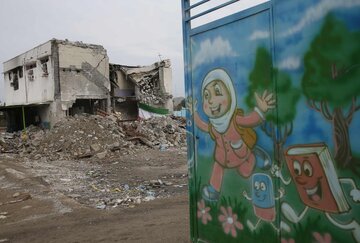
In another part of his remarks, Ayatollah al-Moussawi referred to the issue of encroachment on state lands and the incidents and clashes that occurred during the demolition of these constructions, and recalling the incident in the "Al-Ba'athah" area, said, "During these incidents, clashes occurred and a number of people lost their lives."
He added, "The supreme religious authority has not emphasized nor does he approve construction on state lands, but poverty, need, and the sharp increase in housing prices have led many citizens to resort to this action, while a small group has also turned this situation into a commercial and illegal activity."
The Baghdad Friday Prayer Leader, criticizing the transformation of this issue into an electoral tool, said, "We should not gather votes for people before elections with promises of land allocation and ownership, and then forget about them after the elections."
He called for legal allocation of land to eligible individuals, organization of marginal and informal areas, and provision of basic services to residents of these areas, and emphasized, "The poverty and need of the people should not be exploited for votes."
Ayatollah al-Moussawi also described the demolition of people's homes without providing suitable alternatives as oppression against underprivileged groups and said, "Some officials treat the poor as if they were enemies, while most residents of informal areas and unauthorized constructions are needy individuals who have no other option for housing, while some officials live in palaces and luxurious homes."
He criticized the increase in some fines and traffic penalties, as well as some government directives, and added, "Imposing more pressure on low-income groups under the pretext of securing government revenue is an example of oppression and corruption."
The Poor Should Be Present in Managerial Positions
At the conclusion of his remarks, the Baghdad Friday Prayer Leader emphasized the necessity of the presence of underprivileged individuals familiar with the people's economic problems in managerial responsibilities, and referring to the simple life of the martyred Muhammad Ali Rajai, the late President of the Islamic Republic of Iran, said, "Martyr Rajai lived a simple life until his martyrdom and was closely familiar with the problems and suffering of the people."
He noted, "One who has experienced poverty and the people's problems firsthand can serve them better."
Ayatollah Sayed Yassin al-Moussawi concluded by calling on officials to avoid oppression and injustice and to make service to the poor and needy the foundation and core of their governance and responsibility.
**************
End/ 345E